

How To Install Radiator Pipework
Posted: Friday, August xiv, 2022
Share on: Facebook, Twitter
Goose egg is better than a cosy domicile to come home to at the end of the solar day. Simply, if you don't have the correct number of radiators to give your house the heat it needs, you'll probable be faced with the option of adding a new one to your system.
Plumbing equipment a whole new radiator to your existing pipework is a peachy manner to give a cold room a boost. Only, in that location are a few important considerations to make - observe out more in our consummate guide below!
Is information technology Easy to Fit a New Radiator?
Difficulty: Hard
For anyone who has experience in plumbing, fitting a new radiator is an easy job that can be done in a day. However, to the average DIYer, information technology might not be every bit simple. Yous will demand to adjust your pipework under your floorboards which, if not done correctly, could crusade you a costly leak or even a boiler failure.
You also need some specialist tools and skills to cutting, solder and seal the pipes together. So, as always, if in dubiousness, inquire an practiced to practise it!
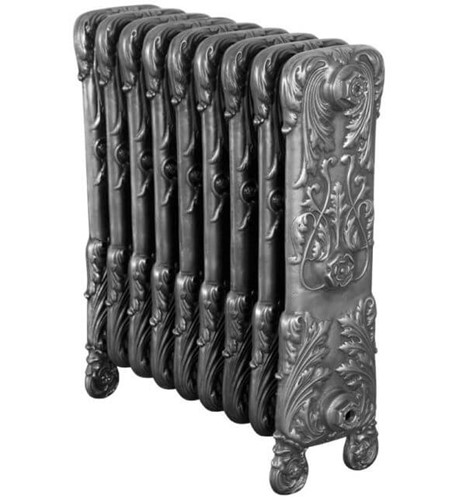
Pictured: Chelsea one Column 675mm, ix Sections - Hand Burnished
Adding Radiators to Existing Organization - Things to Consider
Earlier you get to work, calculation an extra radiator to your central heating system takes some thought.
Brand sure y'all can respond these questions before you begin plumbing equipment it..
-
Is your banality powerful enough for a new radiator?
Different boilers have dissimilar capabilities when it comes to how many radiators they can handle. If at that place are too many radiators in the organization, it can cause your boiler to fail. And so, if you are certain y'all need more radiators in your domicile only your boiler is too small, you lot might need an upgrade before you go any further.
-
Are your electric current radiators working properly?
If your heating is on full just your radiators aren't providing enough heat, cheque that there isn't a problem with them earlier you go through the process of calculation a whole new radiator to your system.
We've got a useful weblog mail explaining the different reasons why your radiators are too common cold. It could be something as simple as bleeding your radiators that brings the estrus back to your room!
-
How many BTUs do you need?
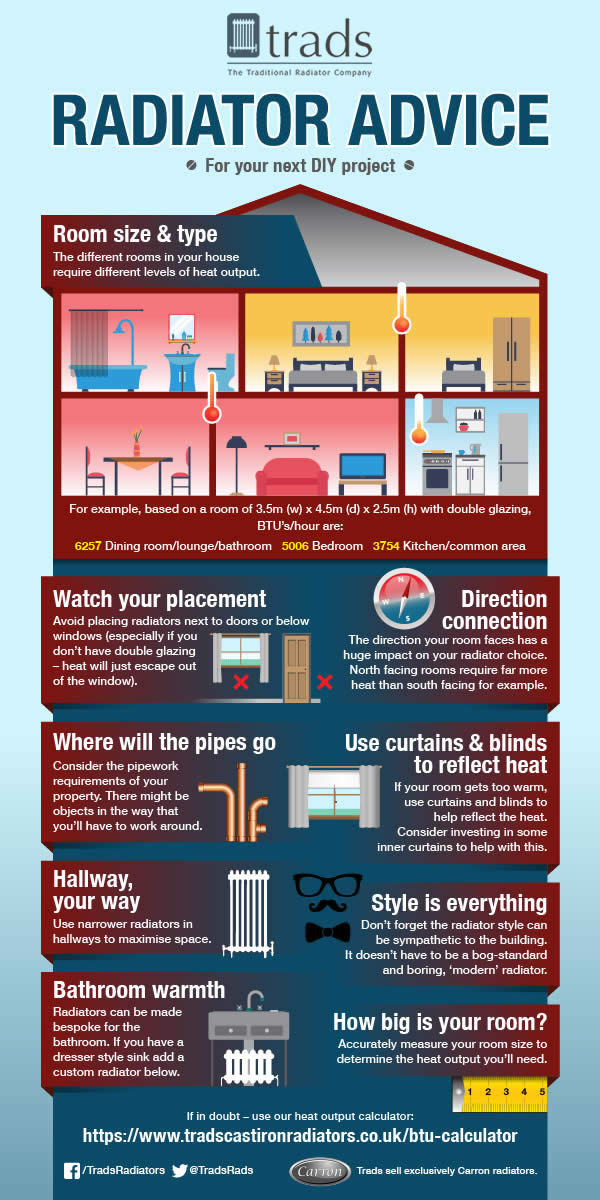
If yous are sure your current radiators are working fine and you still call up you need to add a new one, getting the right BTUs for the room is essential. Remember, if there is already one existing radiator in the room, you demand to add the BTUs of both of them together.
Employ our BTU calculator if you lot aren't sure what size radiator you need.
-
Take you found the best place to put your new radiator?
Radiators are usually placed underneath windows, merely consider where volition be best in your room. Information technology might be, for example, that y'all want it on the complete opposite side of the room to an existing radiator to eliminate a common cold spot.
You should also bear in mind where the existing pipework is, every bit y'all will demand to employ this to connect your new radiator to the primal heating system. The nearer you tin go your radiator to the existing pipe run, the easier it will be. Sentinel out for any joists in the floorboards also, as these tin can make it the way of fitting your new pipework!
Plumbing fixtures a New Radiator to Existing Pipes - Step-Past-Step
As we have already said, fitting a new radiator to the existing pipes of your central heating system might not be a DIY job if yous aren't familiar with plumbing.
To kickoff with, you volition need to brand sure you lot take the right tools for the job, including:
- Adjustable wrench and screwdriver
- Tape measure
- Spirit level
- Pipe cutter and pipe wrench
- Soldering torch
- PTFE record
Then, you will need to follow this step-by-pace guide…
-
Identify the flow and return pipes in your primal heating system
To practise this, y'all can become to your boiler which should have them labelled. Or, if you lot are really unsure, you can switch on your central heating system and encounter which one heats upwards outset. Be conscientious doing this - don't check when the pipes could be very hot!
-
Now, turn the banality off and let the radiators to cool
Equally with whatsoever task regarding your radiators, you want to ensure that they are completely cool earlier starting whatsoever work on them.
-
Bleed the radiator system
Once your radiators are cool, y'all demand to remove all the water from your central heating system. The way you drain information technology depends on what type of boiler you have, simply typically y'all should accept a drain-off valve that you lot tin use at your boiler or one of your radiators.
With the power to your boiler and your water supply turned off, adhere a hose piping to the drain off valve and open information technology. The water should begin to menstruum out through the hose, where yous can dispose of it somewhere safe - think, there may be chemicals and clay in at that place, so downwards a drain is all-time.
Make sure all your radiator valves are open while draining the arrangement - including the bleed valves.
-
Mark the radiator brackets upward onto the wall
When y'all know exactly where you want to place your new radiator, mark up where you will spiral the subclass onto the wall. Utilise a spirit level to ensure it is straight. Y'all should usually exit about 125mm (5 inches) of space betwixt the floor and the bottom of the radiator.
-
Adhere the wall brackets
Once y'all're absolutely sure you've got the perfect place for your new radiator, drill into the wall and secure the brackets into place, ready to hang the radiator.
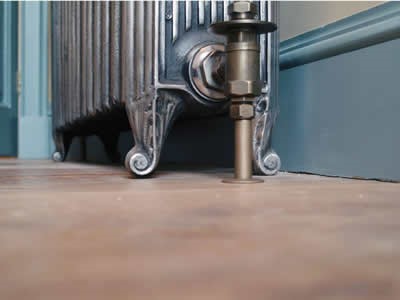
If you are fitting cast iron or Victorian radiator, it might not accept a bracket, simply rather a wall stay. When positioning a flooring mounted radiator like this, try and align information technology so the pipe will come through the middle of a floor lath, like in the picture below, rather than the edge.
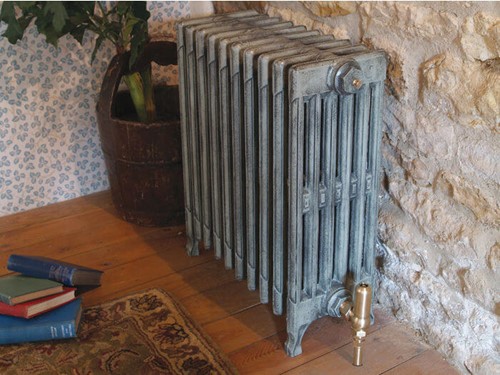
Pictured: Victorian half-dozen column Cast Iron Radiator
-
Fit the radiator valves
Before you position the radiator, fit its valves. Wrap some PTFE tape around the thread showtime to ensure you take a strong seal.
You lot should take a lockshield on one end, and your thermostatic valve or manual valve at the other - information technology doesn't actually matter which one goes where. Use your adjustable wrench to ensure they are fit in prissy and tight, but don't overdo them.
At the top of the radiator, screw in the drain valve and stop cap in the same way.
-
Hang the radiator on the wall
Once your bracket and radiator valves are all in place, hang the radiator on the wall. Or, for a cast atomic number 26 radiator, fix the wall stay in place. Everything should now be in position for you lot to run your pipework.
-
Elevator rug and floorboards
If you haven't already, lift upward your carpet and floorboards and find the existing pipework below. Mark on your wall or floor where the pipe will need to go through the floorboards to connect with your radiator valve, and drill a hole for it.
-
Cut and lay pipework from the radiator to the existing pipework
Now, you need to measure the length of piping y'all need to run to reach your flow and render pipes. If you don't know what you lot are doing at this signal, it's a adept idea to consult with a professional plumber!
When cutting pipes, always make sure you use a suitable pipe cutter. When soldering, ensure you take created a complete watertight seal with no stress points.
-
Cut into existing pipework and add a tee piece
When your new pipework has been run from the radiator to the existing flow and render pipes, y'all demand to join them together.
To do this, y'all will demand to remove a department from both the menses and return pipes and add in a tee join.
-
Connect the new pipework to the tee joint
Finally, you can connect your new radiator pipes into those new tee joints to add together them into the existing central heating system.
When you've washed this, ensure all your radiator valves are tightly fitted and in the correct position - your bleed valve should be closed and the flow valves should at present exist open. With everything in place, refill your primal heating organization and burn up the heating to cheque your new radiator is working.
Accept a expect at the new pipework and when you are sure there are no leaks, put your floorboards and carpet dorsum downward.
Don't forget to add some radiator inhibitor to the system when y'all are done either, to assistance prevent any blockages damaging your nice new radiator!
Are you looking for a cute new radiator to add to your abode? Take a look at range of bandage iron radiators to detect yours today
Shop Online at Trads
Feel free to contact us if you need any help choosing a radiator
< Back To Blog

Source: https://www.tradscastironradiators.co.uk/blog/how-to-fit-a-new-radiator-to-your-central-heating-system/
Posted by: curryhainced.blogspot.com
0 Response to "How To Install Radiator Pipework"
Post a Comment